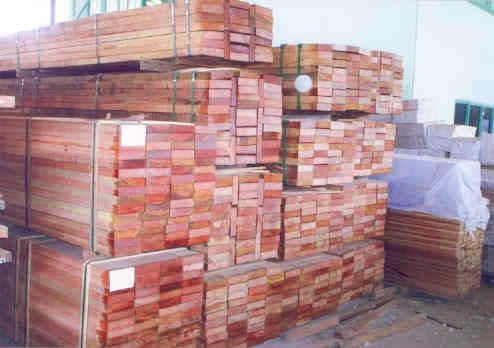
Indonesia is the first and only South-East Asia countries banned the export of sawntimbers (back in late 1980s), that means whatever form of rough sawntimbers coming out from Indonesia after 1990, they are all illegal. The Indonesian government made such decision was to encouraged downstream activities and promote value-added revenue for the country. Vietnam has also implemented similar measure to protect their local downstream industry in late 1990s.
Malaysia is the second largest exporter of renown tropical species rough sawntimbers after Indonesia, in other words, sawmills in Malaysia are enjoying good times as traditional rough sawntimber buyers all switched their orders to Malaysian suppliers since 1990.
In other ASEAN countries, Thailand sawmillers mainly producing rubberwood sawntimbers, whereas Myanmar sawmillers are producing good quality teak wood and other exotic species sawntimbers. Cambodia and Laos sawmillers are producing some tropical hardwood species suitable for decking, flooring and furniture process. The Philippines was once a major producer for Lauan (also known as Meranti) sawntimbers in the 1970s but the output has dropped drastically since 1990s due to limited resources.
Most South-East Asia countries are following the Malaysia Grading Rules (MGR) to determine the quality of sawntimbers as it has been widely accepted and recognised by overseas buyers for the last 50 years. The grading rules classified into three major categories, i.e. Select & Better grade, Standard & Better grade and Merchantable grade.
Sawntimbers pricing are being determine by the species, quality, sizes, lengths and whether they are Air Dried (AD) or Kiln Dried (KD) rough sawn.
West Malaysia is probably the only place in South-East Asia practising payment by RM/ton (Ringgit Malaysia per ton), whereas all other ASEAN countries are using USD/m3 to do the rough sawntimbers transaction.