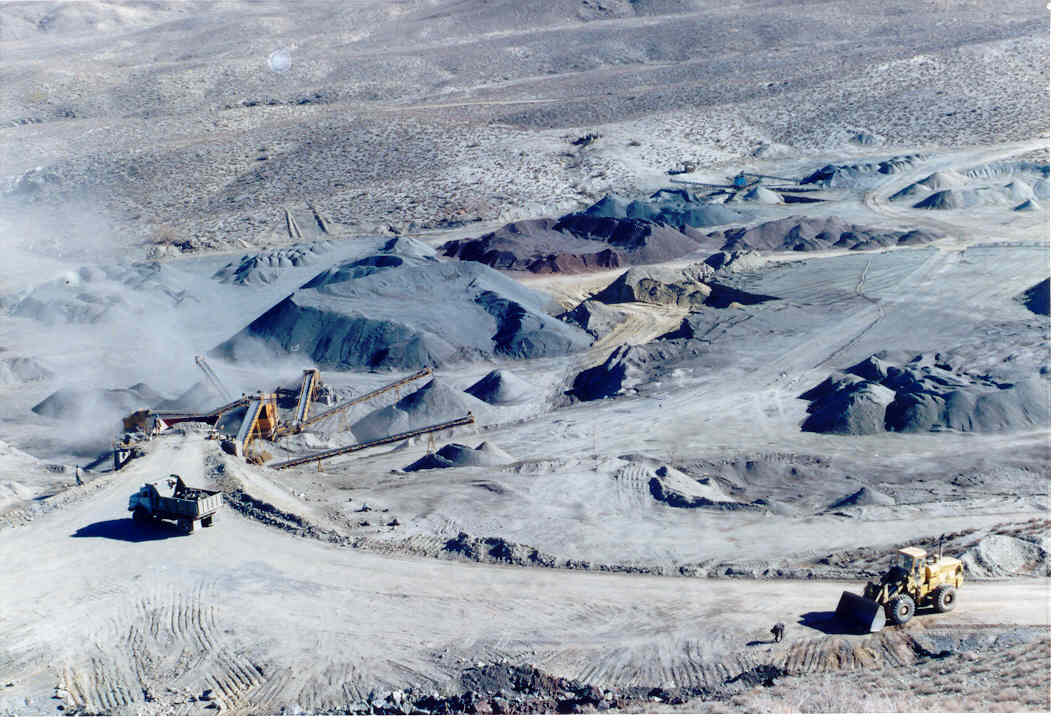
Iron ores are rocks and minerals from which metallic iron can be economically extracted. The ores are usually rich in iron oxides and vary in colour from dark grey, bright yellow, deep purple, to rusty red. The iron itself is usually found in the form of magnetite, hematite, goethite, limonite or siderite. Hematite is also known as "natural ore". The name refers to the early years of mining, when certain hematite ores contained 66% iron and could be fed directly into iron making blast furnaces. Iron ore is the raw material used to make pig iron, which is one of the main raw materials to make steel.
Iron ore mining methods vary by the type of ore being mined. There are four main types of iron ore deposits worked currently, depending on the mineralogy and geology of the ore deposits. There are magnetite, titanomagnetite, massive hematite and pisolitic ironstone deposits.
Hematite iron ore deposits are currently exploited on all continents, with the largest intensity in South America, Australia and Asia. Most large hematite iron ore deposits are sourced from metasomatically altered banded iron formations and rarely igneous accumulations.
World production averages one billion metric tons of raw ore annually. The world's largest producer or iron ore is the Brazilian mining corporation Vale, followed by Anglo-Australian companies BHP Billiton and Rio Tinto Group. A further Australian supplier, Fortescue Metals Group Ltd may eventually bring Australia's production to second in the world.
World consumption of iron ore grows 10% per annum on average with the main consumers being China, Japan, South Korea, USA and EEC. China is currently to be the world's largest steel producing country. China is followed by Japan and South Korea, which consume a significant amount of raw iron ore and metallurgical coal. In 2006, China produce 588 million tons of iron ore, with an annual growth of 38%.