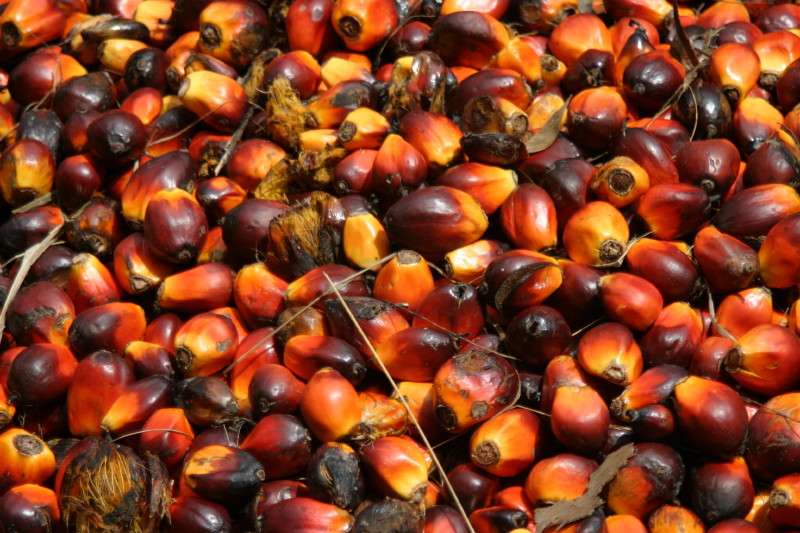
Palm oil is an edible plant oil derived from the fruit of the Arecacease Elaeis oil palm. It may have now surpassed soybean oil as the most widely produced vegetable oil the world. It is also an important component of many soaps, washing powders and personal care products, is used to treat wounds, and has controversially found a new use as a feedstock for bio-fuel.
The palm fruit is the source of both palm oil (extracted from palm fruit) and palm kernel oil (extracted from the fruit seeds). Palm oil itself is reddish because it contains high amount of beta-carotene. It is used as cooking oil, to make margarine and is a component of many processed foods. Boiling it for a few minutes destroys the carotenoids and the oil becomes colorless. Palm oil is one of the few vegetable oils relatively high in saturated fats (like coconut oil) and thus semi-solid at room temperature.
Malaysia is currently the leading producer of CPO, followed by Indonesia and Columbia. In fact, growers in both Indonesia and Malaysia are increasing production of palm oil to meet the global demand spurred by bio-fuels, with the Indonesia government looking for it to become the world's top producer of palm oil on top of their agenda.
In addition to serving its traditional markets, it is looking to produce bio-diesel. Hence there are many new mills and refineries being built by major Malaysian & Indonesian companies in recent years.